
A Beginner’s Guide to Understanding the 2026 World Cup
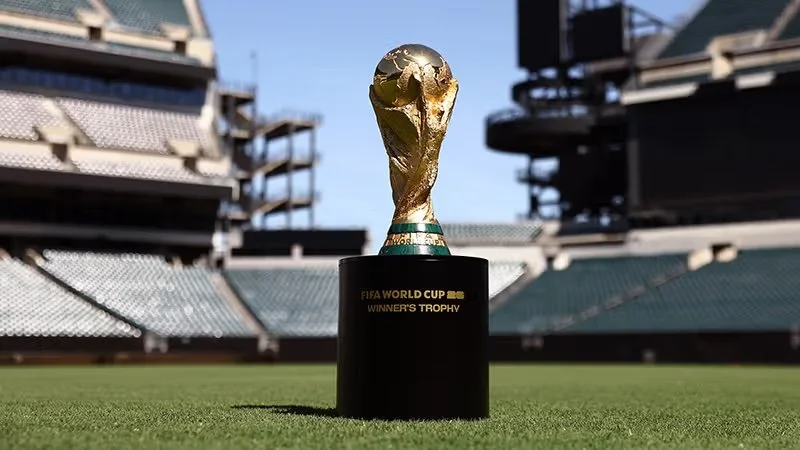
The format of the 2026 World Cup is unlike any other in history.
No shame — the rules this year are new and different for everyone.
The 2026 FIFA World Cup is underway, and somewhere right now, a parent is printing out a bracket pool sheet, looking at their family confused around the kitchen table, and realizing that nobody actually understands how this thing works.
I know because that was my family last Saturday. We sat down with the bracket sheet, ready to make our picks. We breezed through the group stage — pick the top two teams in each group, easy enough. Then we hit the Round of 32, and the questions started coming.
"Wait, who do they play?"
"What's a 'best third-place team'?"
"Are we sure this bracket isn't broken?"
The bracket wasn't broken. The 48-team World Cup format is just genuinely confusing the first time you encounter it. And nobody — not FIFA, not the major sports sites, not the bracket apps — does a good job of explaining the jump from the group stage to the knockouts.
So this post is for everyone who sat at a kitchen table last weekend and got lost. Here's how the 2026 World Cup actually works, from someone who had to figure it out the same way you're about to.
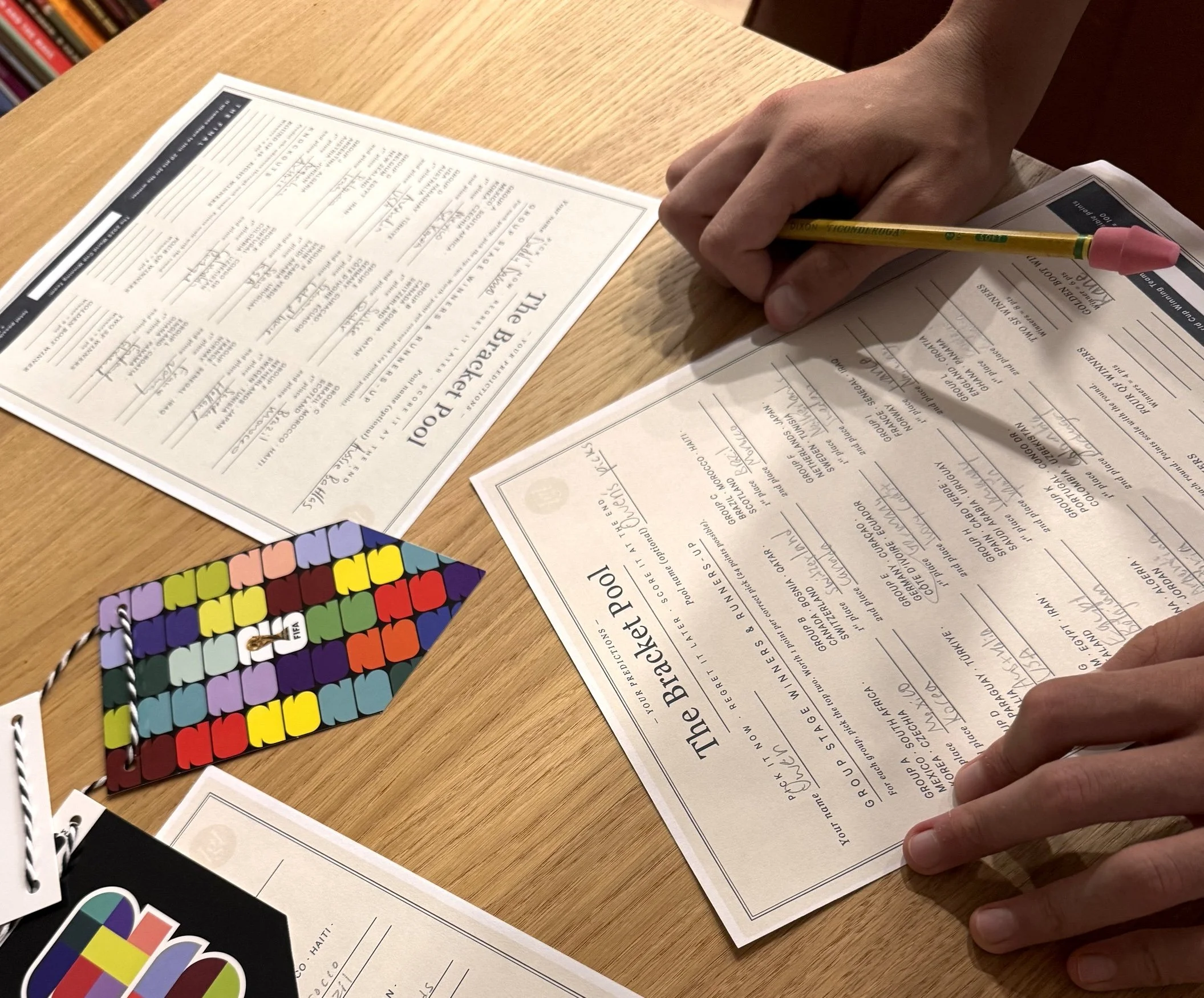
Filling out a World Cup bracket pool in 2026 might give even seasoned soccer fans some pause.
First, the basics: what's actually happening this summer
The 2026 World Cup is the biggest soccer tournament in history. By every measure.
48 teams competing (up from 32 in previous tournaments)
104 matches total (up from 64)
16 stadiums across 3 countries — the United States, Canada, and Mexico
39 days of football, from June 11 to July 19
A few more factors making this World Cup more complex even if you've never paid attention to soccer before:
It's the first World Cup with this many teams. FIFA expanded the field from 32 to 48 teams starting this year, which means countries that have never been in a World Cup before (Curaçao, Cabo Verde, Uzbekistan, and others) are now making their dreams come true on a world stage. There are new underdogs to root for.
It's the first World Cup hosted by three countries at once. Previous tournaments were single-country affairs. This one runs simultaneously across the US, Canada, and Mexico, which means matches are happening in 16 cities across three time zones.
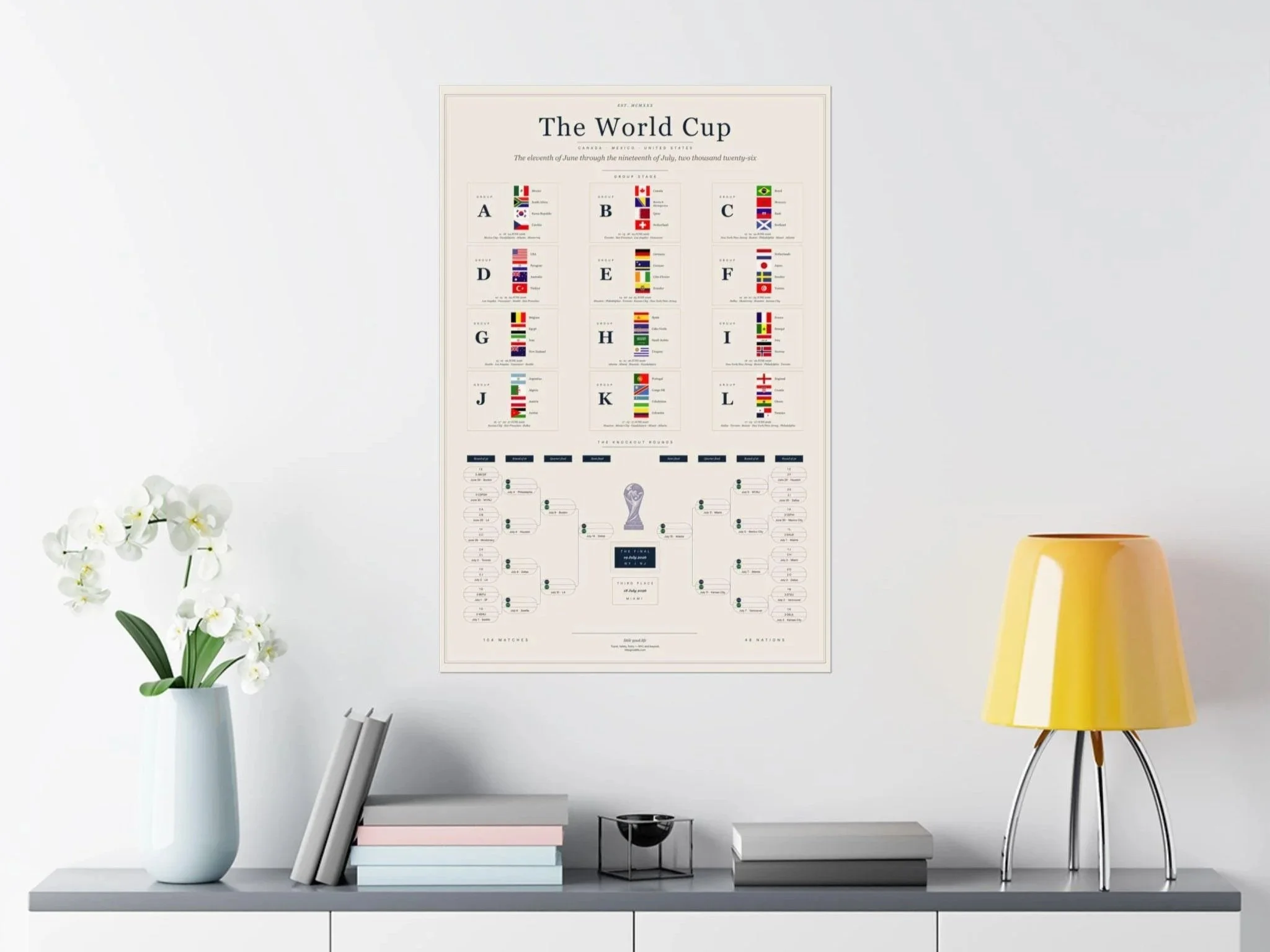
How the tournament is structured
The World Cup is two distinct phases. Understanding the jump between them is where most people get lost.
Phase 1: The Group Stage (June 11 – June 28)
This part is intuitive.
The 48 teams are divided into 12 groups of 4 teams each, labeled Groups A through L. Each team plays the other three teams in its group in a round robin, so every team plays three group-stage matches.
A win is worth 3 points. A draw is worth 1 point. A loss is worth 0.
After all three matches, the teams in each group are ranked by points. The top finishers move on to the knockout rounds.
Who advances from the group stage?
1st-place team from each group → advances to Round of 32 (that's 12 teams)
2nd-place team from each group → advances to Round of 32 (that's another 12 teams)
8 best 3rd-place teams across all 12 groups → also advance to Round of 32
That's where it gets wonky. We'll come back to those eight 3rd-place teams in a second.
Total teams advancing from group stage: 32
(12 first-place + 12 second-place + 8 best third-place = 32)
This matters because in previous World Cups, only the top 2 from each group advanced — and there was no "best third-place" slot at all. The third-place rule is an inaugural change for 2026, because FIFA had to find a way to get 48 teams down to a power-of-two number for the knockout bracket.
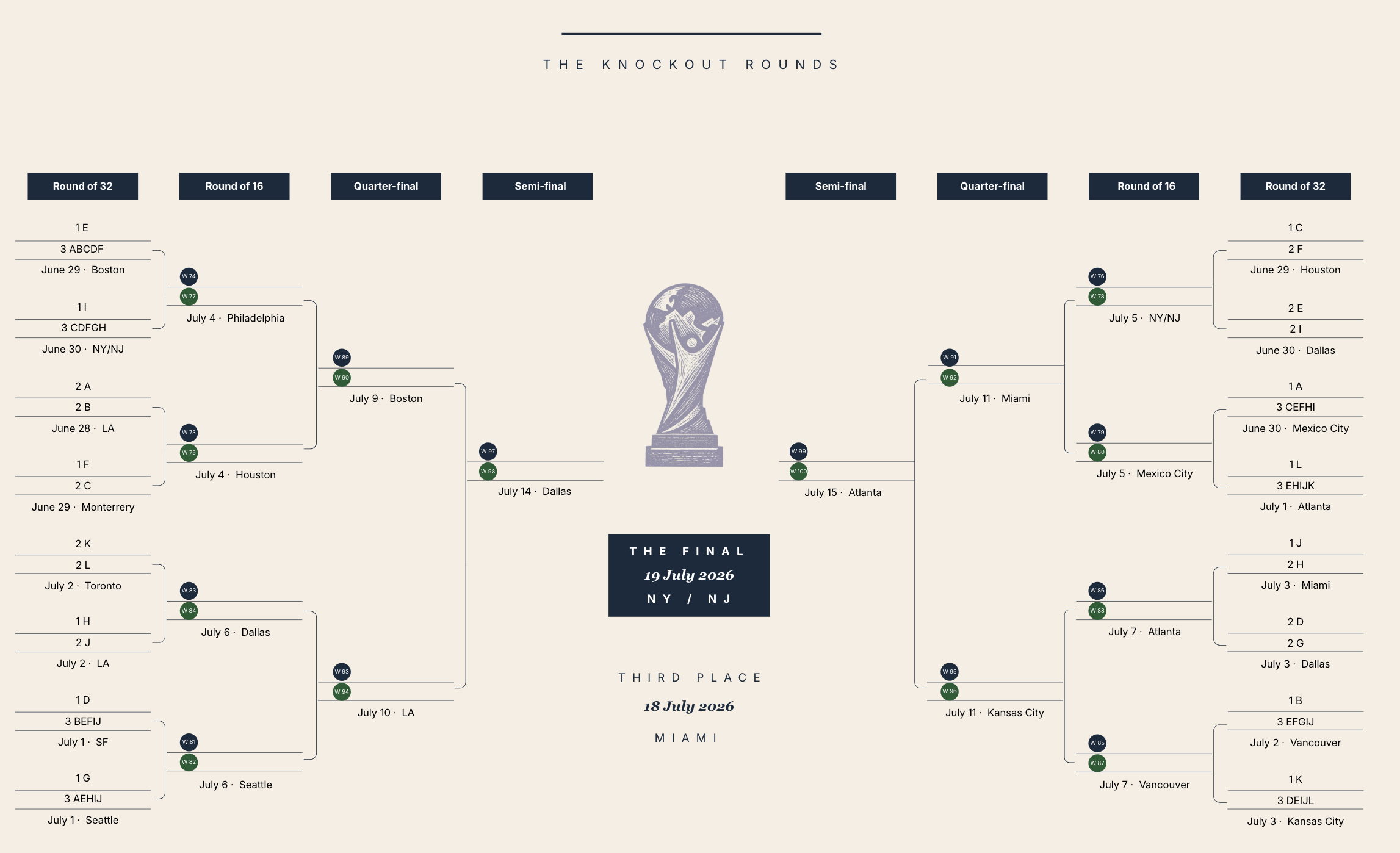
Phase 2: The Knockout Rounds (June 28 – July 19)
This is where things get interesting on a bracket sheet. Here's how it works.
Once you have your 32 advancing teams, they enter a single-elimination bracket. Win and you advance; lose and you go home. The bracket has six rounds:
Round of 32 — 32 teams play 16 matches. 16 winners advance.
Round of 16 — 16 teams play 8 matches. 8 winners advance.
Quarterfinals — 8 teams play 4 matches. 4 winners advance.
Semifinals — 4 teams play 2 matches. 2 winners advance.
Third Place Match — the two semifinal losers play one match for bronze.
The Final — the two semifinal winners play one match for the trophy.
The Round of 32 is new for 2026. Previous World Cups went straight from the group stage to the Round of 16, because they only had 32 advancing teams (16 matches × 2 teams = 32, the math worked). With 48 teams sending 32 forward, there's now an extra round at the start of the knockouts.
This is where the bracket gets confusing — because it's not immediately obvious who plays whom.
The part nobody explains well: how the bracket actually gets filled in
Here's the question your bracket pool sheet is asking you to answer: when Group A wraps up, where does the winner go? Who do they play in the Round of 32?
The answer is that FIFA has a pre-determined bracket structure that maps every group-stage finish to a specific Round of 32 match. It's published in advance. You don't need to figure it out — but you do need to know it exists.
Here's a simplified version of how it works:
The 1st-place team from Group A plays one of the 8 best 3rd-place teams (specifically a 3rd-place team from Groups C, E, F, H, or I, depending on which third-place teams advance).
The 2nd-place team from Group A plays the 2nd-place team from Group B.
The 1st-place team from Group B plays a 3rd-place team from Groups E, F, G, I, or J.
And so on, for all 32 teams. Clear as mud, right?
Here’s the thing: you don't necessarily need to know which specific teams play which other teams when filling out your bracket pool sheet. You could just focus on picking the winners. When the bracket sheet asks you to predict the Round of 16, it's asking: of the 32 teams that advance from the group stage, which 16 will win their first knockout match?
You don't have to map them perfectly to specific matchups. You just have to predict who survives.
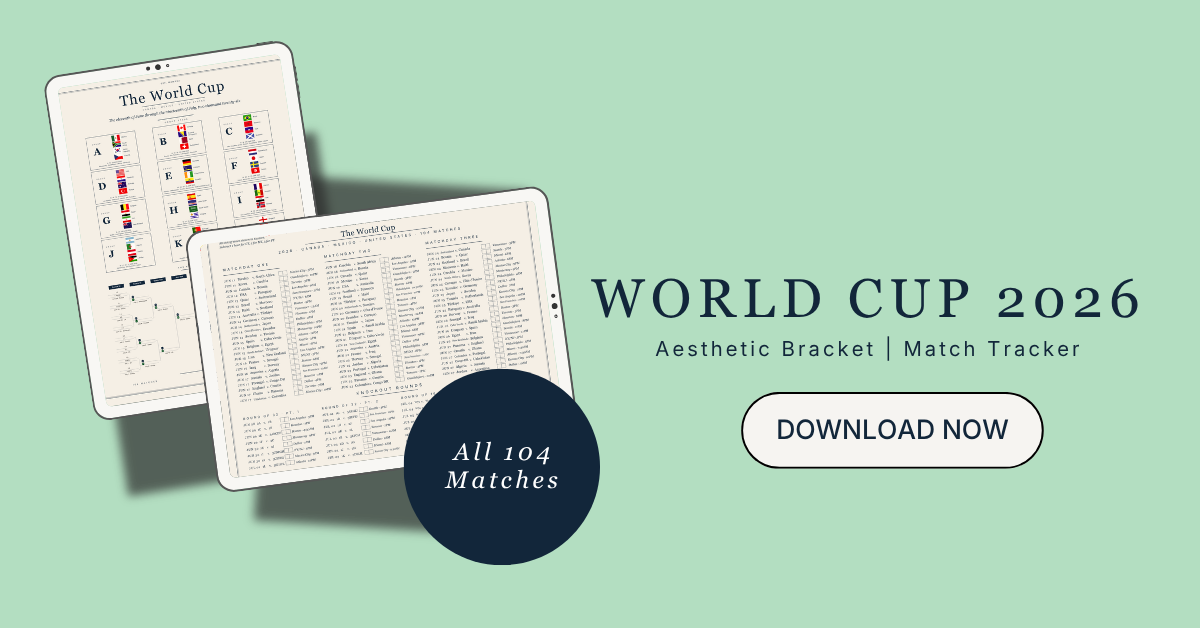
However, as mentioned, pre-determined bracket rules indeed align advancing third-place teams to face specific group winners to balance the bracket. So if you want to avoid predicting matchups that would never happen, you need to use a FIFA-accurate bracket for the Round of 32. That’s why having a prediction pool sheet aligned with a bracket makes a lot of sense. And that’s also why my pool sheet skips the Round of 32 and focuses on predicting the Round of 16 — a few underdogs are sure to squeeze into the deeper stages.
The "best third-place teams" thing
This is the single most confusing part of the new format, so let’s break it down.
After the group stage, you have:
12 first-place teams (definitely advancing)
12 second-place teams (definitely advancing)
12 third-place teams (but only the best 8 advance)
How do you decide which 8 third-place teams are the "best"?
FIFA will rank all 12 third-place teams against each other based on:
Points earned in the group stage (3 per win, 1 per draw)
Goal differential (goals scored minus goals conceded)
Total goals scored
Fair play record (fewer yellow and red cards)
A few more tiebreakers if needed (including referring to to the most recent published edition of the FIFA/Coca‑Cola Men’s World Ranking)
The top 8 third-place teams advance. The bottom 4 go home with the other 4th-place losers from the group stage.
This means a 3rd-place team from a tough group (with 4 points and a -1 goal differential, say) might not advance — while a 3rd-place team from an easier group (with 4 points and a +2 differential) does. It's a little unfair, and it's a little wild, and it's part of what makes the new format interesting.
For your bracket pool sheet: when the Round of 32 has slots like "3rd-place team from Group A/B/C/D" — that means one of those 4 groups' 3rd-place teams will fill that slot, depending on which 3rd-place teams qualify as the best 8. You can predict which group it'll be (an educated guess based on which group is strongest), or just write in a name and see how it shakes out.
How to follow along without watching every match
You don't have to watch all 104 matches. (Some of us do have to go to school and work.) Here's how to manage the bonanza of fútbol:
Pick a team to follow, even if you have no connection. Your grandmother's country, the underdog you read about, whoever your kid randomly picks. Having a rooting interest changes everything.
Watch the matches with stakes. The most dramatic matches are usually the final group-stage games (when teams have to win to advance) and the Round of 32 onward (when every loss sends a team home). Some of the group stage matches will be interesting but lower-stakes — you can skim them.
Check the standings, not the schedule. You don't need to know the kickoff time of every match (but if you want to, my match tracker handles this for you). You need to know: who's still in the tournament, and who they play next. A good bracket poster will provide this.
If you watch nothing else, watch the Final. Even casual fans remember World Cup Final moments years later. A Final in your own time zone is a rare thing — don't sleep through it.
A field guide for the next six weeks
Here's the short version of everything above, for the kitchen-table version of you:
48 teams, 12 groups, top 2 from each group + 8 best 3rd-place teams advance to a 32-team knockout bracket.
Six rounds in the knockouts: Round of 32 → Round of 16 → Quarterfinals → Semifinals → Third Place → Final.
The bracket structure is pre-determined — you just predict winners, not matchups.
The "best third-place team" rule is the weirdest part — eight of twelve third-place teams advance, ranked by points and goal differential.
The Final is July 19 at MetLife. It's the one match everyone should watch.
If you're using a bracket pool sheet (mine is in the Little Good Life shop, naturally), you just need to know: predict the winners at each stage. You don't have to map specific matchups. Pick who you think wins, and let the bracket structure handle the rest.
If you're using a match tracker to follow along, the tracker is organized by matchday — so you can see who's playing today, this week, this round. That's the easiest way to follow the tournament without getting lost in the weeds of the bracket.
If you're hosting a watch party, the Watch Party Planner handles the food and the guests; the Bracket Pool Sheet handles the friendly competition. Together they make the tournament a social event, not a solo screen-watching marathon.
And if you've read this whole post and still feel a little confused — that's normal. Even hardcore soccer fans had to spend an afternoon staring at the new bracket structure to wrap their heads around it. You're going to get it after the first few rounds. Promise.
The tournament is underway. Pick a team. Print a tracker. Make some food using spices from the countries playing. Settle in.
It's the last World Cup the US will host until at least 2034, possibly longer. The Final being at MetLife (just outside New York City) means the football universe ends in our backyard for one weekend in July. Even if you're not a soccer person, this is a moment. It's going to be an amazing time.
